

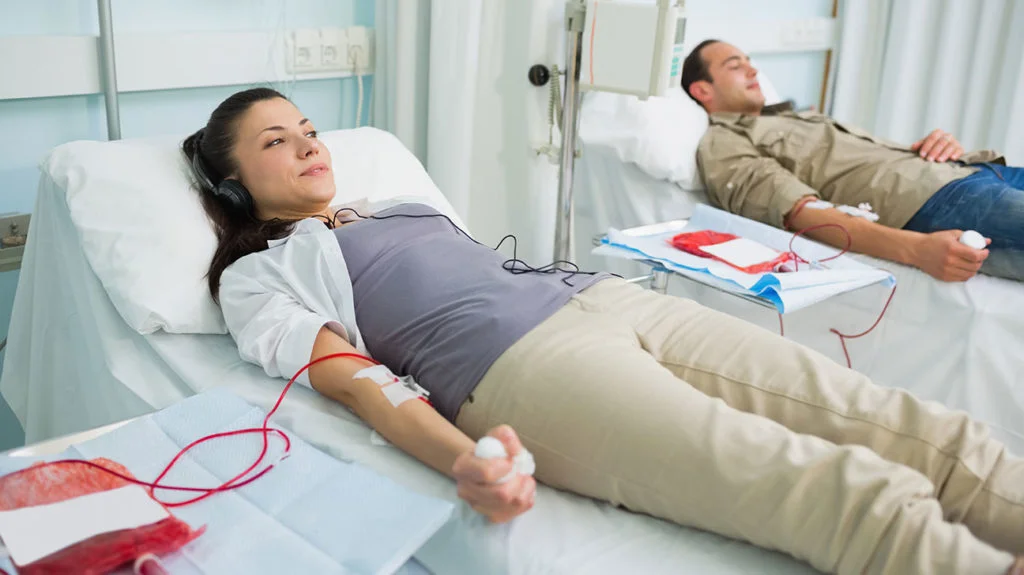
A blood transfusion is the delivery of blood products through a vein. The blood products may be red cells, white cells, platelets, clotting factors, plasma, or whole blood. The blood may come from an unrelated or related donor, or it may have been taken from the recipient and stored in advance.
A Little Bit About Blood
Blood is like the body’s transportation system, busy making deliveries and pickups. As blood circulates throughout the body, it delivers oxygen and nutrients to all the places they’re needed. Blood also collects waste products, such as carbon dioxide, and carries them to the organs responsible for making sure wastes leave the body.
Blood is a mixture of cells and liquid, and each component has a specific job:
- Red blood cells carry oxygen to the body’s tissues and remove carbon dioxide. Red blood cells make up about 40% to 45% of a person’s blood and live for 120 days.
- White blood cells are part of the immune system, and its main defense against infection. White blood cells make up less than 1% of a person’s blood.
- Platelets are cell fragments that help blood clot, which helps to prevent and control bleeding. They are about 5% of our blood.
- Plasma is a pale yellow liquid mixture of water, proteins, electrolytes, Carbohydrates, cholesterol, hormones, and vitamins. About 55% of our blood is plasma.
The blood cells are made in the bone marrow, a spongy substance contained within many of the bones in the body. A full-grown adult has about 10 pints of blood (almost 5 liters) in his or her body.
Types of Blood
Every person has one of the following blood types: A, B, AB, or O. Also, every person’s blood is either Rh-positive or Rh-negative. So, if you have type A blood, it’s either A positive or A negative.
The blood used in a transfusion must work with your blood type. If it doesn’t, antibodies (proteins) in your blood attack the new blood and make you sick.
Type O blood is safe for almost everyone. About 40 percent of the population has type O blood. People who have this blood type are called universal donors. Type O blood is used for emergencies when there’s no time to test a person’s blood type.
People who have type AB blood are called universal recipients. This means they can get any type of blood.
If you have Rh-positive blood, you can get Rh-positive or Rh-negative blood. But if you have Rh-negative blood, you should only get Rh-negative blood. Rh-negative blood is used for emergencies when there’s no time to test a person’s Rh type.
When blood transfusion is needed?
Some of the different conditions that require transfusion of blood or blood products include:
- Blood loss – that is severe enough to affect blood volume and circulation
- Severe anaemia – where the blood can’t carry sufficient oxygen to the cells of the body
- Thrombocytopenia – spontaneous bleeding caused by too few platelets.
Different types of blood collection
The main ways in which blood is collected include:
- Homologous – whole blood is collected from the donor, separated into different components and given as a transfusion to people with compatible (matching) blood types.
- Apheresis – only some components, either plasma or platelets, are taken from the blood of the donor. A machine centrifuges the cells and gives the red cells, or red cells and plasma, back to the donor.
Less common ways in which blood is collected include:
- Autologous – prior to a scheduled operation or transfusion, a person donates blood specifically for their own use.
- Directed or designated – prior to a scheduled transfusion, a person requests that only blood collected from family members or friends be used for transfusion.
Autologous and directed donations are now discouraged except where a medical specialist believes there is a case for ‘special need’. Contrary to what some people believe, these blood donations share the same small risks normally associated with homologous donations.
Types of Blood Transfusions
Blood is transfused either as whole blood (with all its parts) or, more often, as individual parts. The type of blood transfusion you need depends on your situation.
For example, if you have an illness that stops your body from properly making a part of your blood, you may need only that part to treat the illness.
Red Blood Cell Transfusions
Red blood cells are the most commonly transfused part of the blood. These cells carry oxygen from the lungs to your body’s organs and tissues. They also help your body get rid of carbon dioxide and other waste products.
You may need a transfusion of red blood cells if you’ve lost blood due to an injury or surgery. You also may need this type of transfusion if you have severe anemia (uh-NEE-me-uh) due to disease or blood loss.
Anemia is a condition in which your blood has a lower than normal number of red blood cells. Anemia also can occur if your red blood cells don’t have enough hemoglobin (HEE-muh-glow-bin).
Hemoglobin is an iron-rich protein that gives blood its red color. This protein carries oxygen from the lungs to the rest of the body.
Platelets and Clotting Factor Transfusions
Platelets and clotting factors help stop bleeding, including internal bleeding that you can’t see. Some illnesses may cause your body to not make enough platelets or clotting factors. You may need regular transfusions of these parts of your blood to stay healthy.
For example, if you have hemophilia (heem-o-FILL-ee-ah), you may need a special clotting factor to replace the clotting factor you’re lacking. Hemophilia is a rare, inherited bleeding disorder in which your blood doesn’t clot normally.
If you have hemophilia, you may bleed for a longer time than others after an injury or accident. You also may bleed internally, especially in the joints (knees, ankles, and elbows).
Plasma Transfusions
Plasma is the liquid part of your blood. It’s mainly water, but also contains proteins, clotting factors, hormones, vitamins, cholesterol, sugar, Sodium, potassium, calcium, and more.
If you have been badly burned or have liver failure or a severe infection, you may need a plasma transfusion.
What to expect during blood transfusions?
If you need a transfusion, you will get the blood cells through tubing connected to a needle in your vein. You will most likely get the transfusion in a hospital or an outpatient clinic. A transfusion takes about two to three hours for each unit of blood cells.
For a red blood cell transfusion, the blood you get must match or be compatible with your blood type. For platelet transfusions, matching blood types is less important. Even so, you will usually get a matching blood type, especially if you may need many transfusions.
If you have had a bad reaction to previous transfusions, you will get medicine to help prevent another reaction. Otherwise, you will probably not get any medications with your transfusion.
After the procedure
Following your transfusion, the needle and IV line will be removed, and your temperature, blood pressure, heart rate and other vital signs will be checked. You may develop a small bruise around the IV site, but this should go away with time.
Transfusion complications
Occasional complications caused by receiving a blood transfusion can include:
- Fluid overload – this can be lessened by introducing the donated blood slowly.
- Allergic reaction – the person’s immune system treats the donated blood products as a threat. Symptoms include itching, dizziness, headache and difficulties in breathing.
- Haemolytic reaction – happens if the person is given the wrong type of blood. The transfused red blood cells are destroyed or broken down. Symptoms include a feeling of pressure in the chest, back pain and difficulties in breathing. Haemolytic reaction can sometimes be life threatening.
- Transfusion related acute lung injury (TRALI) – where the transfused blood reacts with the person leading to blockages in the blood vessels in the lungs. Symptoms include difficulty in breathing and low blood oxygen levels. This can sometimes be life threatening.
How is blood collected?
Blood banks collect blood from volunteer donors. Before they donate, volunteers must answer questions about their current health, health history, and any diseases they may have been exposed to through travel to foreign countries, sexual behavior, or drug use. Only people who pass this survey are allowed to donate blood.
Donated blood is then carefully tested for certain diseases and to find out the blood type. If there is any chance that the blood may not be safe to use, it is thrown away.
Most blood that passes the tests is then split into its components and sent out for use.
Blood and its components can be stored or used for only a short time before they must be thrown away. This is why blood banks are always looking for donors.
Possible side effects
During the transfusion, you will have your temperature, pulse and blood pressure checked regularly by the nurses to detect any reaction to the blood. Common side effects that can occur are headaches, a slight rise in temperature, or a skin rash. These effects can be relieved by drugs such as paracetamol. Severe side effects from blood transfusions are rare because blood is cross-matched first.
Results
You may need further blood testing to see how your body is responding to the donor blood and to check if your blood levels have reached an appropriate level.
For example, if before the transfusion you were anemic, meaning you had low levels of red blood cells, your doctor will check to see how much the transfusion raised your red blood cell count.
Or, if you’ve had low platelets because of chemotherapy drugs, your doctor may test your blood to see whether the transfusion sufficiently boosted your platelet count. Some conditions require repeated blood transfusions.