


Meningitis is an inflammation of the meninges, the membranes that cover the brain and spinal cord. Most cases are caused by bacteria or viruses, but some can be due to certain medications or illnesses.
Bacterial meningitis is rare, but is usually serious and can be life-threatening if not treated right away. Viral meningitis (also called aseptic meningitis) is relatively common and far less serious. It often remains undiagnosed because its symptoms can be similar to those of the common flu.
There are two main Types of meningitis:
- Viral meningitis is fairly common. It usually does not cause serious illness. In severe cases, it can cause prolonged fever and seizures.
- Bacterial meningitis is not as common but is very serious. It needs to be treated right away to prevent brain damage and death.
These two kinds of meningitis share the same symptoms. It’s very important to see a doctor if you have symptoms, so that he or she can find out which type you have.
Causes of Meningitis:
Viral meningitis is caused by viruses. Bacterial meningitis is caused by bacteria.
Meningitis can also be caused by other organisms and some medicines, but this is rare.
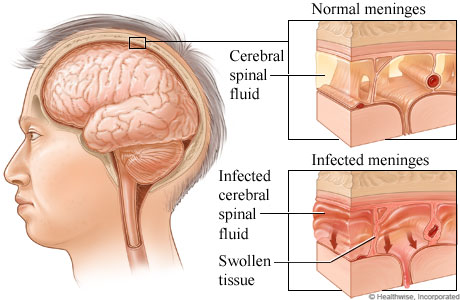
Meningitis is contagious. The germs that cause it can be passed from one person to another through coughing and sneezing and through close contact.Meningococcal bacteria is carried in saliva or droplets from the nose of an infected person. Sneezing, coughing, kissing, or sharing cigarettes, food, drinks, or other things that contain saliva can all help to pass the bacteria from one person to another. From the time the bacteria gets, into a person’s mouth or nose, it may take from two to ten days for the person to become sick. The average time is three to four days.
Any time a part of the body is infected, it is likely to become inflamed and swollen. These symptoms are especially serious in the brain. However, bacterial infections of the meninges are extremely serious illnesses, and may result in death or brain damage even if treated. Meningitis is also caused by fungi, chemical irritation, drug allergies, and tumors.
Signs And Symptoms:
Early symptoms of meningitis can easily be mistaken for the flu.
In newborns, signs and symptoms include the following:
- Irritability
- High pitched cry
- Poor feeding
- Vomiting
- Fever
- Seizures
- Bulging fontanelle (“soft spot” in the skull) or stiff neck (less common)
In children and young adults, signs and symptoms include the following:
- High fever
- Severe headache
- Vomiting or nausea
- Stiff neck
- Sensitivity to light
- Drowsiness
- Skin rash
- Confusion
- Seizures
- Clouding or loss of consciousness
Older adults may have no signs or symptoms other than altered mental state and lethargy. Often they have no fever.
Diagnosis:
Meningitis is diagnosed by testing some of the fluid that surrounds the spinal cord for disease-causing bacteria or infection-fighting cells. The fluid is removed from the spinal cord with a needle in a procedure known as a spinal tap or lumbar puncture.
Treatment:
Treatment for meningitis may vary according to the type of meningitis.
Bacterial meningitis: Bacterial meningitis requires immediate treatment with intravenous antibiotics and cortisone-like medications. The antibiotic or combination of antibiotics that your doctor may choose depends on the type of bacteria causing the infection. Your doctor may recommend a broad-spectrum antibiotic until he or she can determine the exact cause of the meningitis.
Viral meningitis: Viral meningitis is not life threatening and will often resolve itself within two weeks without any medical interventions. Treatment of mild cases of viral meningitis usually includes:
- Rest
- Drinking plenty of fluids
- Over-the-counter pain medications to help reduce fever and relieve body aches
If the cause of your meningitis is a herpes virus, there’s an antiviral medication available.
Other types of meningitis: If the cause of your meningitis is unclear, your doctor may preemptively begin antiviral and antibiotic treatment while a cause is being determined.
- Anti-fungal treatments are often associated with adverse side effects, so treatment is often deferred until a laboratory can confirm that the cause is fungal.
- Non-infectious meningitis due to allergic reaction or autoimmune disease may be treated with cortisone-like medications. In some cases, no treatment may be required, because the condition can resolve on its own. Cancer related meningitis will also resolve itself when the underlying cancer is treated.
Long-Term Effects of Meningitis:
Most people recover well after meningitis, but it may take some time to return to normal.
The after effects of meningitis vary from person to person but may include:
- emotional and psychological problems
- minor learning difficulties which may require extra help at school.
More severe cases of meningitis and septicaemia may cause:
- hearing loss
- blindness
- learning impairment
- behavioural problems
- epilepsy
- problems with movement and coordination
- scarring of the skin
- amputations
- damage to bones and joints
- kidney failure.