

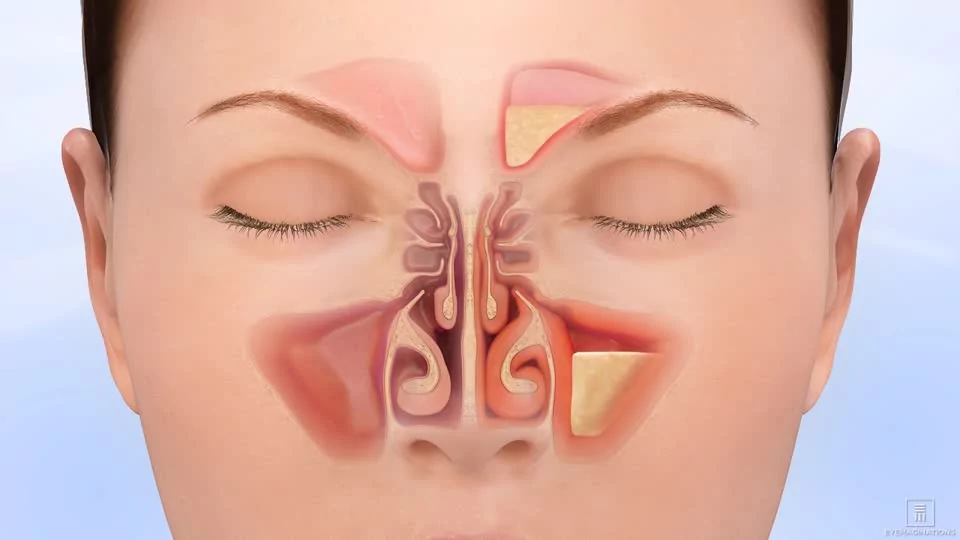
Sinusitis can be explained as a condition in which a person experiences severe and acute inflammation in the air-filled cavities present inside the human skull. Sinusitis may attack people of any age and sex.Children suffering from chronic disease like pain in ears, Common cold, and other viral diseases are prone to sinusitis. Asthmatic patients are also at higher risk of sinusitis. The sinuses are the spaces between the bones in the face where air passes and where a fluid called mucus drains into the nose. Sinusitis is quite common. It feels much like a head cold, with a stuffy or runny nose and a headache.
The four major pairs of sinuses are the:
- Frontal sinuses (in the forehead)
- Maxillary sinuses (behind the cheek bones)
- Ethmoid sinuses (between the eyes)
- Sphenoid sinuses (behind the eyes)
Alternative Names of Sinusitis:
Sinus infection, sinusitis, acute sinusitis, chronic sinusitis, sinus headache, bronchitis, rhinosinusitis, ethmoiditis, sphenoiditis, antritis, hay fever, viral infection, bacterial infection, allergens, allergy, allergies, indoor allergy, indoor allergies, and headache.
Causes And Risk Factors of Sinusitis:
Sinusitis usually follows an upper respiratory infection (such as a cold) or an allergic reaction (such as hay fever, or allergic rhinitis). These can cause inflammation and swelling that keeps the sinuses from draining properly. When sinuses become blocked, they provide a place for bacteria, viruses, and fungus to live and grow rapidly. Although a cold is most often the culprit, sinusitis can be caused by anything that prevents the sinuses from draining.
Other common causes for sinusitis include the following:
- Allergies (hay fever, cigarette smoke, dry air, pollutants)
- Changes in air pressure (for example, from swimming or climbing high altitudes)
- Infections from dental problems
- Obstructions in the nasal or sinus cavities (such as nasal polyps, deviated septum, or nasal bone spur)
- Physical injury to the sinuses
- Bacteria, viruses, and fungi
Risk factors for sinusitis include:
- Having asthma
- Overuse of nasal decongestants
- Frequent swimming and/or diving
- Climbing or flying to high altitudes
- Nasal polyps (swellings in the nasal passage) or nasal bone spurs; or other abnormalities such as a deviated septum or cleft palate
- Dental infection
- Exposure to air pollution and cigarette smoke
- Pregnancy
- Gastroesophageal reflux disease (GERD), in which stomach acid backs up into the esophagus
Being in the hospital, especially if the reason you are in the hospital is related to a head injury or you needed a tube inserted into your nose.
Symptoms of Sinusitis:
A patient with Sinusitis will frequently give the history that he has been suffering from a cold since a few days. This was followed by progressively worsening blockage of the nose and heaviness in the head. Gradually the nasal discharge turned yellowish or greenish and he suffered from headache, cough, bad breath, etc.
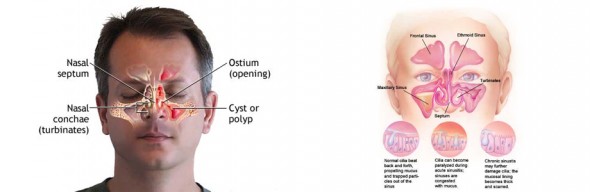
This chronology of events is precisely what happens in most cases of sinusitis, whether they are acute, chronic or recurrent.
Listed here are some of the common symptoms of sinusitis. Not all of them may be seen together but varying combinations of these are seen in most cases:
- Runny nose – the discharge being thick and yellowish or greenish
- Nasal obstruction, blocked nose, obstructed sensation in the nose
- Sensation of pressure in the face and head
- Passage of mucus from the back of the nose into the throat (called post nasal drip or discharge)
- Headache
- Reduced sense of smell
- Bad breath
- Bad taste in mouth at times
- Cough with mucus production (more at night when lying down)
- Teeth pain
- Blocked sensation in one or both ears
- Soreness in throat
- Tiredness, fatigue
- Fever
Pain and tenderness due to sinusitis may vary in location depending on the sinus that is affected in a given case:
- Frontal sinusitis: Pain in forehead region, around eyebrows
- Maxillary sinusitis: Pain in cheekbones, upper jaw, upper teeth on applying pressure
- Ethmoid sinusitis: Pain between the eyes, around the bridge of the nose. There may be swelling of the eyelids.
- Sphenoid sinusitis: Pain deep inside the head, ear pain, neck pain.
Watch out for these signs and symptoms since they indicate that you need immediate medical attention:
- High fever above 101 degrees F
- Swelling of forehead
- Swelling around eyes
- Confusion
- Headache that does not respond to routine medication
- Stiffness of neck
- Double vision or other vision disturbances
- Breathlessness
Tests And Diagnosis:
Your doctor may use several methods to help screen for acute sinusitis, such as:
Physical Exam:
To look for the cause of your symptoms, your doctor will feel for tenderness in your nose or throat. Your doctor may use a tool to hold your nose open and apply medication that constricts blood vessels in your nasal passages. This makes it easier to see inside your nasal passages. Your doctor will then shine a light into your nasal passages to look for inflammation or fluid. This visual inspection will also help rule out physical conditions that trigger sinusitis, such as nasal polyps or other abnormalities.
Nasal Endoscopy:
A thin, flexible tube (endoscope) with a fiber-optic light inserted through your nose allows your doctor to visually inspect the inside of your sinuses.
Imaging Studies:
Images taken using computerized tomography (CT) or magnetic resonance imaging (MRI) can show details of your sinuses and nasal area. These may identify a deep inflammation or physical obstruction that’s difficult to detect using an endoscope.
Nasal And Sinus Cultures:
Laboratory tests are generally unnecessary for diagnosing acute sinusitis. However, in cases in which the condition fails to respond to treatment or is progressing, tissue cultures may help pinpoint the cause, such as identifying a bacterial cause.
Allergy testing:
If your doctor suspects that the condition may be brought on by allergies, an allergy skin test may be recommended. A skin test is safe and quick, and can help pinpoint the allergen that’s responsible for your nasal flare-ups.
Complications:
Although very rare, complications may include:
- Abscess
- Bone infection (osteomyelitis)
- Meningitis
- Skin infection around the eye (orbital cellulitis)
Treatments of Sinusitis:
Antibiotics used to treat acute sinusitis caused by a bacterial infection include amoxicillin (Amoxil, Trimox, others), doxycycline (Doryx, Monodox, others) or the combination drug trimethoprim-sulfamethoxazole (Bactrim, Septra, others). If the infection doesn’t go away or if the sinusitis comes back, your doctor may try a different antibiotic.
Your doctor also may prescribe one or more of the following remedies (which can be useful in reducing inflammation in the sinuses and nose and speeding recovery):
- Decongestants.
- Over-the-Counter Nasal Sprays.
- Prescription inhalers.
- Expectorants.
- Antihistamines.
If infection does not respond to conservative treatment and an anatomical cause is suspected then surgery is often recommended.The use of nasal endoscopes has made possible the successful cure of chronic & recurrent infections of sinuses.