

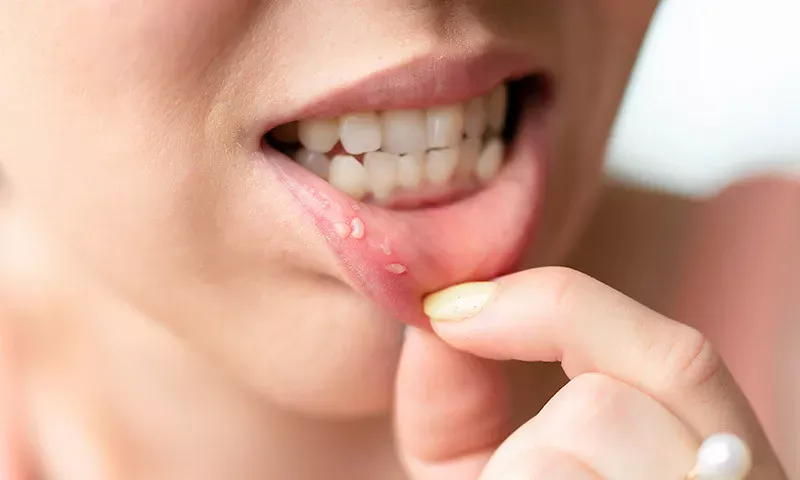
Stomatitis, a non-specific term for an inflamed and sore mouth, can disrupt a person’s ability to eat, talk, or sleep. Stomatitis can occur anywhere within the mouth, including the inside of the cheeks, gums,tongue, lips, and palate. Stomatitis is an inflammation of the lining of any of the soft-tissue structures of the mouth. Stomatitis is usually a painful condition, associated with redness, swelling, and occasional bleeding from the affected area. Bad breath (halitosis) may also accompany the condition. Stomatitis affects all age groups, from the infant to the elderly.
Types of Stomatitis:
There are two main types: acute herpetic stomatitis and aphthous stomatitis. Acute herpetic stomatitis is common and mild. Aphthous stomatitis is common in young girls and female adolescents.
Acute herpetic stomatitis is usually short-lived and easily recognized; however, it may be severe and, in neonates, may be generalized and potentially fatal. Aphthous stomatitis usually heals spontaneously, without a scar, in 10 to 14 days. Other oral infections include gingivitis, periodontitis, Vincent’s angina, and glossitis.
Causes And Symptoms of Stomatitis:
A number of factors can cause stomatitis. Poorly fitted oral appliances, cheek biting, or jagged teeth can persistently irritate the oral structures. Chronic mouth breathing may cause dryness of the mouth tissues, which in turn can lead to irritation. Drinking beverages that are too hot can burn the mouth, causing irritation and pain. Some diseases, such as infections (bacterial, viral, and fungal), gonorrhea, measles, leukemia, pellagra, oral erythema multiforme and AIDS may present with oral symptoms. Chemotherapy and radiation therapy can cause stomatitis by destroying the healthy cells of the oral cavity. Other causes include deficiencies in the B vitamins or vitamin C, and iron deficiency anemia. Stomatitis may also follow overuse of alcohol, tobacco, and spicy foods, as well as exposure to certain toothpastes and mouthwashes. Exposure to heavy metals, such as mercury, lead, or bismuth may also cause stomatitis.
You Might Also Like:
- Mastitis: Its Types, Causes, Symptoms, Diagnosis And Treatment
- Keratitis: Its Types, Causes,Symptoms, Diagnosis And Treatment
- Top 15 Food For Healthy Teeth And Gums
- Dizziness: Its Types, Causes, Symptoms And Treatment
- Hookworm: Its Causes, Symptoms, Tests And Treatment
- Sore Throat: Its Types, Causes, Symptoms, Diagnosis And Treatment
- Sensitive Teeth Proper Dental Care Tips
Aphthous stomatitis, also known as “canker sores,” is a specific type of stomatitis that presents with shallow, painful ulcers that are usually located on the lips, cheeks, gums, or roof or floor of the mouth. These ulcers can range from pinpoint size up to 1 inch (2.5 cm) or more in diameter. Though the specific causes of canker sores are unknown, nutritional deficiencies are suspected.
The symptoms of stomatitis may include:
- reddened mucous membranes in the mouth
- painful areas in the mouth
- increased sensitivity to spicy foods
- presence of ulcers in the oral cavity
- dry or swollen tongue
- difficulty swallowing
Diagnosis of Stomatitis:
Diagnosis of stomatitis can be difficult. A patient’s history may disclose a dietary deficiency, a systemic disease, or contact with materials causing an allergic reaction. A physical examination is done to evaluate the oral lesions and other skin problems. Blood tests may be done to determine if any infection is present. Scrapings of the lining of the mouth may be sent to the laboratory for microscopic evaluation, or cultures of the mouth may be done to determine if an infectious agent may be the cause of the problem.
Treatment of Stomatitis:
The treatment of stomatitis is based on the problem causing it. Local cleansing and good oral hygiene are fundamental. Sharp-edged foods such as peanuts, tacos, and potato chips should be avoided. A soft-bristled toothbrush should be used, and the teeth and gums should be brushed carefully; the patient should avoid banging the toothbrush into the gums.
Local factors, such as ill-fitting dental appliances or sharp teeth, can be corrected by a dentist. An infectious cause can usually be treated with medication. Systemic problems, such as AIDS, leukemia, and anemia are treated by the appropriate medical specialist. Minor mouth burns from hot beverages or hot foods will usually resolve on their own in a week or so. Chronic problems with aphthous stomatitis are treated by first correcting any vitamin B12, iron, or folate deficiencies.
If those therapies are unsuccessful, medication can be prescribed which can be applied to each aphthous ulcer with a cotton-tipped applicator. This therapy is successful with a limited number of patients. More recently, low-power treatment with a carbon dioxide laser has been found to relieve the discomfort of recurrent aphthae. Major outbreaks of aphthous stomatitis can be treated with tetracycline antibiotics or corticosteroids. Valacyclovir has been shown to be effective in treating stomatitis caused by herpesviruses.
Patients may also be given topical anesthetics (usually a 2% lidocaine gel) to relieve pain and a protective paste (Orabase) or a coating agent like Kaopectate to protect eroded areas from further irritation from dentures, braces, or teeth.