

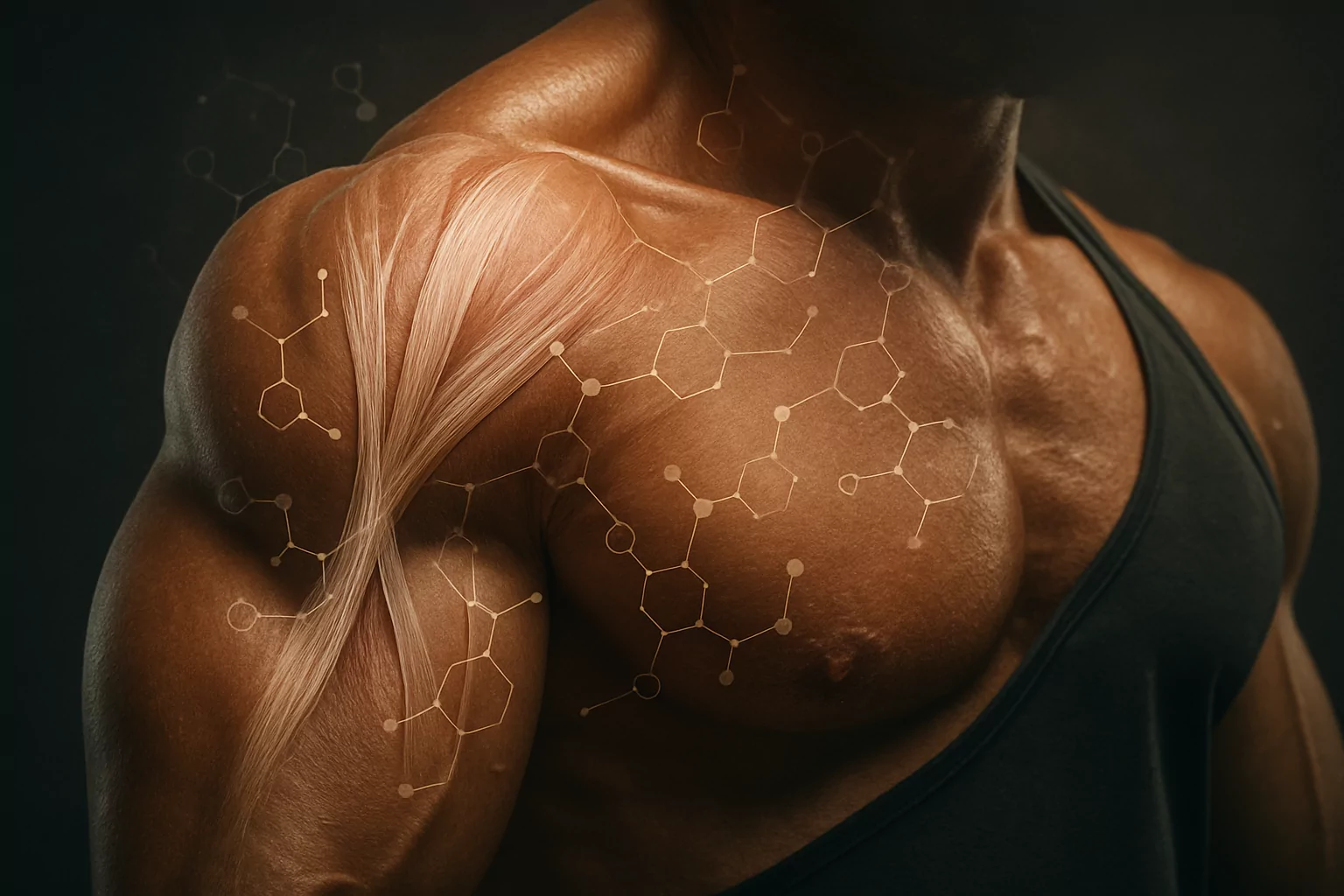
You live for the grind. You destroy muscle in the gym to force it to rebuild bigger, stronger. You push through joints aches and nagging tendonitis because that’s the price of progress. But what about the silent wear and tear on the very systems that enable that growth—your tendons, ligaments, and cellular repair mechanisms?
This is the athlete’s paradox: intense training accelerates the very biological aging processes that can eventually halt your progress. Enter GHK-Cu (Copper Peptide GHK-Cu), a molecule that’s shifting from anti-aging skincare into the protocols of performance-driven individuals.
GHK-Cu isn’t a synthetic stimulant or anabolic. It’s a master regulator—a simple tri-peptide (glycyl-histidyl-lysine) bound to a copper ion that your body produces naturally. Its critical function? To signal repair. The problem? Its levels plummet by up to 60% after age 60, and an intense athletic lifestyle can mimic this decline prematurely.
For the lifter, athlete, or fitness enthusiast, restoring GHK-Cu isn’t about chasing youth for its own sake; it’s about restoring a youthful capacity for repair to better handle the demands you place on your body. Think of it as a crucial software update for your biological hardware.
Decoding GHK-Cu: Your Body’s Innate Repair Signal
At its core, GHK-Cu is a signaling molecule. When present, it binds to DNA and influences the expression of hundreds of genes, primarily shifting them from a state of inflammation and breakdown to one of repair and regeneration.
The science is clear: our natural levels decline drastically with age. For the performance-minded individual, this isn’t just a cosmetic concern. The oxidative stress, systemic inflammation, and constant microtrauma from heavy training create an environment where your body’s innate repair signaling becomes overwhelmed. You’re essentially accelerating the “functional aging” of your recovery systems.
By reintroducing this native signal through supplementation, you’re not introducing a foreign substance; you’re amplifying your body’s own, optimal blueprint for healing and homeostasis. It’s a targeted strategy to enhance what your body already knows how to do, but may be struggling to keep up with.
The Performance Athlete’s Benefits: Beyond the Brochure
Move over, anti-aging creams. For the athlete, GHK-Cu’s benefits are profoundly functional. Here’s how this peptide translates to tangible performance and resilience gains.
1. Superior Tissue Repair & Connective Tissue Fortification
- The Mechanism: GHK-Cu is a potent upregulator of collagen, elastin, and glycosaminoglycan synthesis—the essential building blocks of tendons, ligaments, and skin. Simultaneously, it helps regulate matrix metalloproteinases (MMPs), enzymes that break down old or damaged tissue.
- The Athletic Application: This isn’t about direct muscle growth like a SARM or steroid. This is about fortifying the scaffolding. Stronger tendons and more resilient ligaments mean a greater capacity to handle heavy loads, explosive jumps, and repetitive strains. It’s a proactive defense against chronic issues like tendinopathy, making it a powerful companion to peptides like BPC-157 for targeted injury healing.
2. Systemic Recovery & Inflammation Intelligence
- The Mechanism: GHK-Cu acts as a powerful antioxidant and, crucially, an immune system modulator. It helps shift the immune response away from destructive, chronic inflammation and towards a more targeted, repair-focused state.
- The Athletic Application: The result is accelerated systemic recovery between brutal training sessions. It helps lower the “background noise” of inflammation caused by heavy training, potentially leading to better sleep quality and a faster return to baseline. This makes it an excellent foundational peptide to pair with more targeted recovery agents.
3. Metabolic Optimization & Body Composition Support
- The Mechanism: Research shows GHK-Cu positively influences gene expression related to insulin sensitivity, cholesterol metabolism, and nerve outgrowth. A study published in MDPI highlighted its role in modifying gene expression in human dermal fibroblasts, hinting at its systemic regulatory potential.
- The Athletic Application: For body composition, this supports better nutrient partitioning—helping to shuttle energy towards muscle repair and away from fat storage. The potential neurotrophic effects may even sharpen the mind-muscle connection. While not a direct fat-loss peptide like Tesamorelin, it creates a more metabolically resilient environment.
4. Hair Regrowth & “Aesthetic Longevity”
- The Mechanism: It reactivates dormant hair follicles and increases follicle size by stimulating the dermal papilla cells.
- The Athletic Application: Let’s address the elephant in the room: hair loss is a common concern, often exacerbated by physiological stress and hormonal fluctuations in athletes. GHK-Cu offers a direct, evidence-based approach to supporting hair regrowth, aligning the internal goal of resilience with the external marker of vitality.

The Athlete’s Protocol: Sourcing, Dosing, and Administration
Navigating the peptide space requires precision. Here’s a responsible framework for implementing GHK-Cu.
Source & Legality: In the United States, GHK-Cu is typically sold as a research chemical for in vitro (lab) use only. It is imperative to source from reputable, verified vendors who provide third-party Certificate of Analysis (CoA) for purity and concentration. This is non-negotiable for safety and efficacy.
Dosing Strategy (The Tiered Approach):
- General Wellness & Recovery Support: 1-2 mg per day, subcutaneously.
- Active Injury Repair or Intensive Training Block: 2-3 mg per day.
- Cycling Recommendation: A common protocol is 2-3 months on, followed by a 1-2 month break to prevent potential receptor desensitization and allow the body to reset.
Administration – The Practical Guide:
- Subcutaneous Injection (Primary Method): This is the most effective route for systemic benefits. It involves reconstituting the lyophilized (powder) peptide with bacteriostatic water and injecting into subcutaneous fat (common sites: abdominal area, love handles). Use insulin syringes (29-31 gauge) and rotate injection sites.
- Topical Application: Effective for targeted areas (e.g., applying to a tender elbow or thinning scalp). However, absorption for deep connective tissue or systemic effects is limited compared to injection.
- Stacking for Goals: GHK-Cu stacks synergistically with other peptides. For a formidable healing stack, combine it with BPC-157 for acute tendon/ligament repair. For a broader systemic recovery and longevity approach, consider it alongside peptides like Epitalon.
Risk Management: Side Effects & the Responsible User
A responsible athlete manages risk as diligently as they manage training load.
Common & Manageable Side Effects:
- Injection Site Reactions: Temporary redness, itching, or mild pain.
- Transient Fatigue: Some users report mild tiredness, often dose-dependent, which usually subsides as the body adapts.
- Headaches: Occasional and typically mild.
The Critical Copper Consideration:
The “Cu” stands for copper, which rightly raises questions about heavy metal accumulation. At the micro-doses used in peptide therapy (1-3 mg of the peptide, which contains only micrograms of copper), the risk of systemic copper toxicity in healthy individuals is very low. However, responsible use is mandatory:
- Get Bloodwork: Check your serum copper and zinc levels before starting a cycle and periodically thereafter.
- The Zinc Balance: Supplementing with Zinc (15-30 mg elemental zinc daily, such as zinc picolinate or monomethionine) is non-negotiable. Copper and zinc compete for absorption. Supplementing GHK-Cu without zinc can disrupt this vital ratio. The National Institutes of Health provides a detailed overview on dietary zinc and its importance.
Contraindications: Individuals with Wilson’s Disease (a copper metabolism disorder), those with active cancer, or who are pregnant/nursing should avoid GHK-Cu.
The Verdict: Integrating GHK-Cu into a Performance Lifestyle
GHK-Cu is not a magic bullet for a new bench press PR. It is an “enabler”—a sophisticated tool that upgrades your body’s innate maintenance and repair operating system.
Who Should Seriously Consider It?
- The veteran athlete (30+) focused on training longevity and injury prevention.
- Anyone pushing through heavy loading phases or competition prep where recovery is paramount.
- Athletes rehabbing a connective tissue injury or managing a nagging joint issue.
- Those who have the fundamentals (nutrition, sleep, programming) dialed in and are seeking a cutting-edge, biologically-sound optimizer.
The Final Call to Action:
Prioritize the pillars of performance first. If your foundation is solid and you’re looking for a way to enhance your biological infrastructure for more consistent, high-quality training over the long term, then GHK-Cu warrants deep research. Always consult with a healthcare professional experienced in peptide therapy before beginning any new regimen. For those interested in other peptides that enhance cellular health and recovery, explore our guide on Livagen Peptide.
By supporting the very fabric of your body—the connective tissue, the repair systems, the metabolic resilience—GHK-Cu helps ensure that the machine you work so hard to build remains strong, functional, and capable for the long run.