

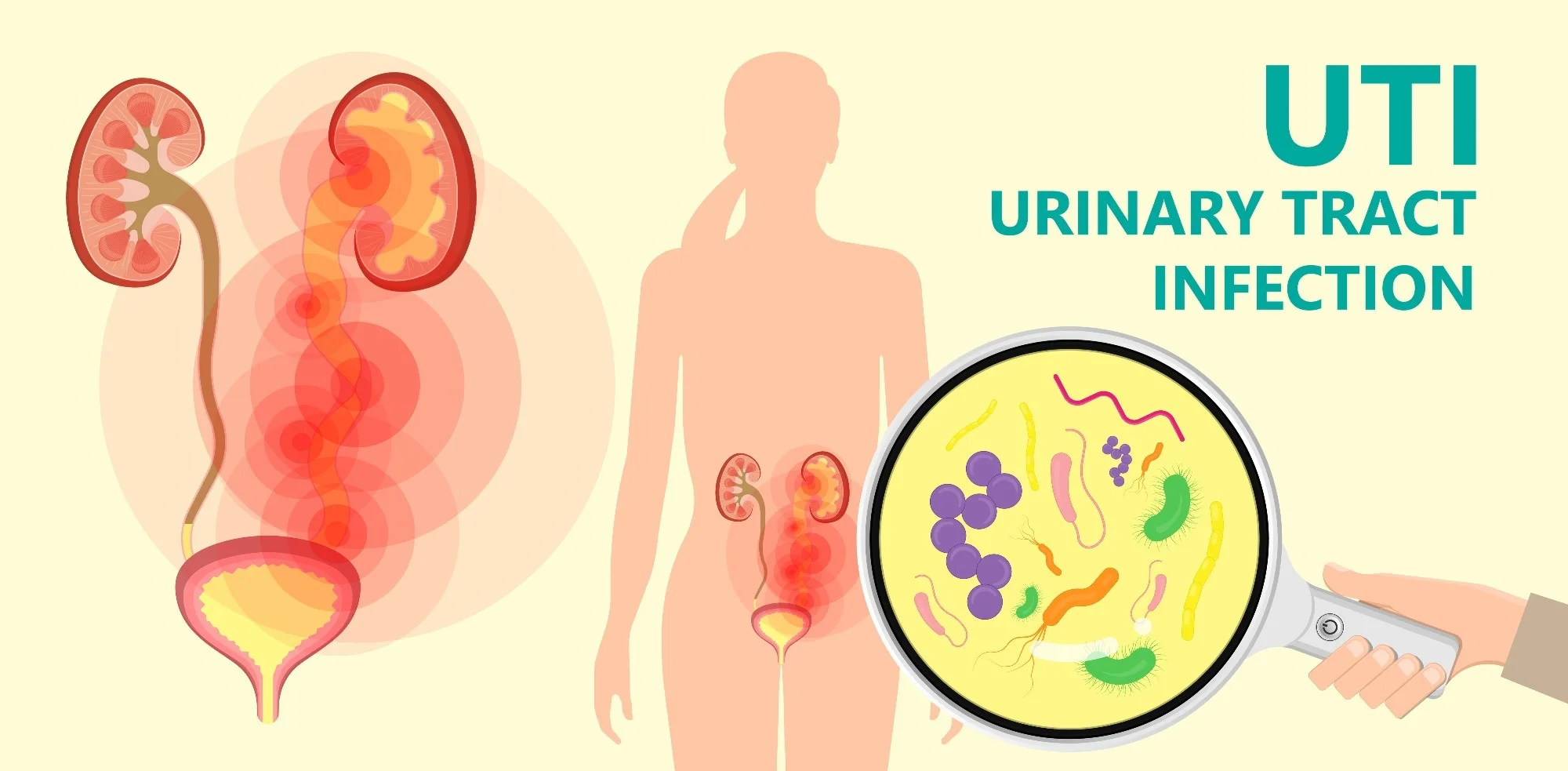
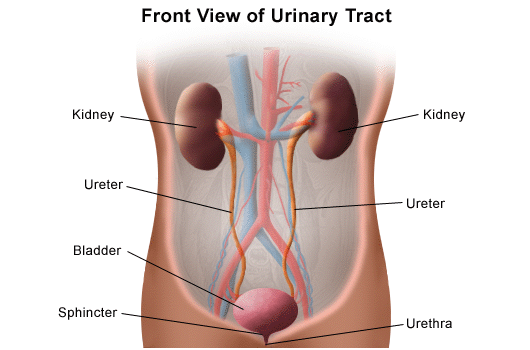
A urinary tract infection (UTI) is an infection involving the kidneys, ureters, bladder, or urethra. These are the structures that urine passes through before being eliminated from the body. A urinary tract infection (UTI) is a bacterial infection that affects part of the urinary tract. Most urinary tract infections are bladder infections. A bladder infection usually is not serious if it is treated right away. If you do not take care of a bladder infection, it can spread to your kidneys. A kidney infection is serious and can cause permanent damage.
UTI Risk factors:
- Being a Female: Generally, women are found to be at a greater risk of contracting the infection as compared to that of men.
- Sexually active: Sexually active women should always urinate after sex to prevent the contraction of the infection.
- Birth control diaphragms: Women using a diaphragm as a birth control, may contract the infection more frequently.
- Menopause: The lack of estrogen during menopause can lead to urinary tract infection.
- Urinary tract abnormalities: Many babies are born with abnormalities in the urinary tract. This doesn’t allow them to urinate easily or pushes the urine back into the urethra.
- Suppressed immune system: People suffering from diabetes and other diseases which affect their body immune system are more at risk of conceiving the urinary tract infection.
- Using catheter: Usually people hospitalized due to diseases or surgeries or paralysis use a catheter (a tube) for urinating. Catheters are not usually hygienic and have germs that lead to urinary tract infection.
UTI Complications:
When treated promptly and properly, urinary tract infections rarely lead to complications. But left untreated, a urinary tract infection can become something more serious than merely a set of uncomfortable symptoms.
Untreated urinary tract infections can lead to acute or chronic kidney infections (pyelonephritis), which could permanently damage your kidneys. Urinary tract infections may be overlooked or mistaken for other conditions in older adults. Young children also have an increased risk of kidney infections. Pregnant women who have urinary tract infections may have an increased risk of delivering low birth weight or premature infants.
Women who experience three or more urinary tract infections are likely to continue experiencing them.
Exams And Tests For UTI:
Diagnosis of a urinary tract infection is based on information you give about your symptoms, medical and surgical history, medications, habits, and lifestyle. A physical examination and lab tests complete the evaluation. A urine sample is usually collected to perform the following tests:
- Urinalysis is done to look for white blood cells, red blood cells, bacteria, and to test for certain chemicals, such as nitrites in the urine. Most of the time, your doctor or nurse can diagnose an infection using a urinalysis.
- Urine culture – clean catch may be done to identify the bacteria in the urine to make sure the correct antibiotic is being used for treatment.
CBC and a blood culture may be done.
The following tests may be done to help rule out problems in your urinary system that might lead to infection or make a UTI harder to treat:
- CT scan of the abdomen
- Intravenous pyelogram (IVP)
- Kidney scan
- Kidney ultrasound
- Voiding cystourethrogram
Treatment of UTI:
UTIs are treated with antibiotics, medicines that kill the bacteria that cause the infection. Your doctor will tell you how long you need to take the medicine. Make sure you take all of your medicine, even if you feel better! Many women feel better in one or two days.
If you don’t take medicine for a UTI, the UTI can hurt other parts of your body. Also, if you’re pregnant and have signs of a UTI, see your doctor right away. A UTI could cause problems in your pregnancy, such as having your baby too early or getting high blood pressure. Also, UTIs in pregnant women are more likely to travel to the kidneys.A high fluid intake is essential. Alkaline substances, such as citrates, taken in water might improve symptoms.
Prevention:
You may do everything right and still experience a urinary tract infection, but you can reduce the likelihood by doing the following:
- Drink 6-8 glasses of water each day and unsweetened cranberry juice regularly.
- Eliminate refined foods, fruit juices, caffeine, alcohol, and sugar.
- Take Vitamin C (250 to 500 mg), Beta-carotene (25,000 to 50,000 IU per day) and Zinc (30-50 mg per day) to help fight infection.
- Develop a habit of urinating as soon as the need is felt and empty your bladder completely when you urinate.
- Urinate before and after intercourse.
- Avoid intercourse while you are being treated for an UTI.
- After urinating, blot dry (do not rub), and keep your genital area clean. Make sure you wipe from the front toward the back.
- Avoid using strong soaps, douches, antiseptic creams, feminine hygiene sprays, and powders.
- Change underwear and pantyhose every day.
- Avoid wearing tight-fitting pants.
- Wear all cotton or cotton-crotch underwear and pantyhose.
- Don’t soak in the bathtub longer than 30 minutes or more than twice a day.