

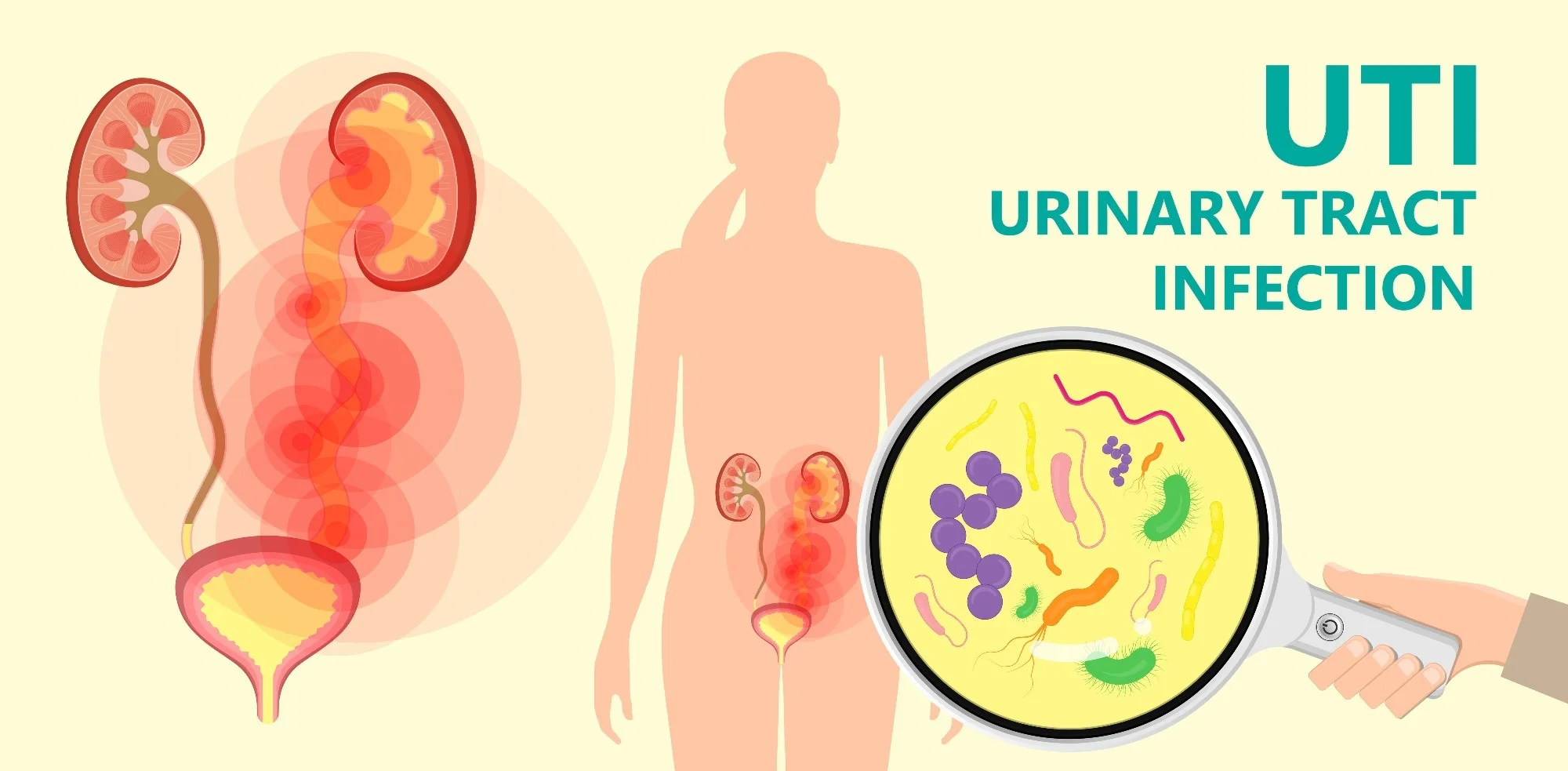
A urinary tract infection (UTI) is an infection involving the kidneys, ureters, bladder, or urethra. These are the structures that urine passes through before being eliminated from the body. A urinary tract infection (UTI) is a bacterial infection that affects part of the urinary tract. Most urinary tract infections are bladder infections. A bladder infection usually is not serious if it is treated right away. If you do not take care of a bladder infection, it can spread to your kidneys. A kidney infection is serious and can cause permanent damage.
The condition ranges from cystitis (a mild but distressing inflammation that is limited to the bladder) to severe infections of the kidney, such as pyelonephritis (when the infection has reached the kidney tissue itself).
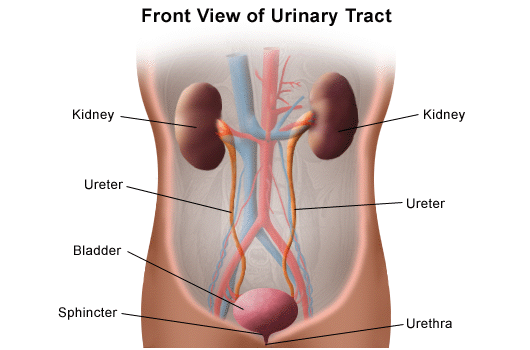
Types of Urinary Tract Infections:
There are three types of urinary tract infections:
- Urethritis is infection of the urethra.
- Cystitis is infection of the bladder.
- Pyelonephritis occurs when bacteria ascend up the ureters and infect the kidneys.
Causes of UTI:
The urinary system is composed of the kidneys, ureters, bladder and urethra. All play a role in removing waste from your body. Urinary tract infections typically occur when bacteria enter the urinary tract through the urethra and begin to multiply in the bladder. Although the urinary system is designed to keep out such microscopic invaders, the defenses sometimes fail. When that happens, bacteria may take hold and grow into a full-blown infection in the urinary tract. Urinary tract infections are caused by microorganisms—usually bacteria—that enter the urethra and bladder, causing inflammation and infection. The bacteria also may travel up the ureters and infect the kidneys. More than 90 percent of cystitis cases are caused by E. coli, a bacterium normally found in the intestines.
Women tend to get them more often because their urethra is shorter and closer to the anus than in men. Because of this, women are more likely to get an infection after sexual activity or when using a diaphragm for birth control. Menopause also increases the risk of a UTI.
The following also increase your chances of developing a UTI:
- Diabetes
- Advanced age (especially people in nursing homes)
- Problems emptying your bladder completely (urinary retention)
- A tube called a urinary catheter inserted into your urinary tract
- Bowel incontinence
- Enlarged prostate, narrowed urethra, or anything that blocks the flow of urine
- Kidney stones
- Staying still (immobile) for a long period of time (for example, while you are recovering from a hip fracture)
- Pregnancy
- Surgery or other procedure involving the urinary tract
Sign And Symptoms of UTI:
Symptoms of a UTI vary by age, gender, and whether a catheter is present. Among young women, UTI symptoms typically include a frequent and intense urge to urinate and a painful, burning feeling in the bladder or urethra during urination. The amount of urine may be very small. Older women and men are more likely to be tired, shaky, and weak and have muscle aches and abdominal pain. Urine may look cloudy, dark, or bloody or have a foul smell. In a person with a catheter, the only symptom may be fever that cannot be attributed to any other cause. Normally, UTIs do not cause fever if they are in the bladder. A fever may mean the infection has reached the kidneys or has penetrated the prostate. Other symptoms of a kidney infection include pain in the back or side below the ribs, nausea, and vomiting.