

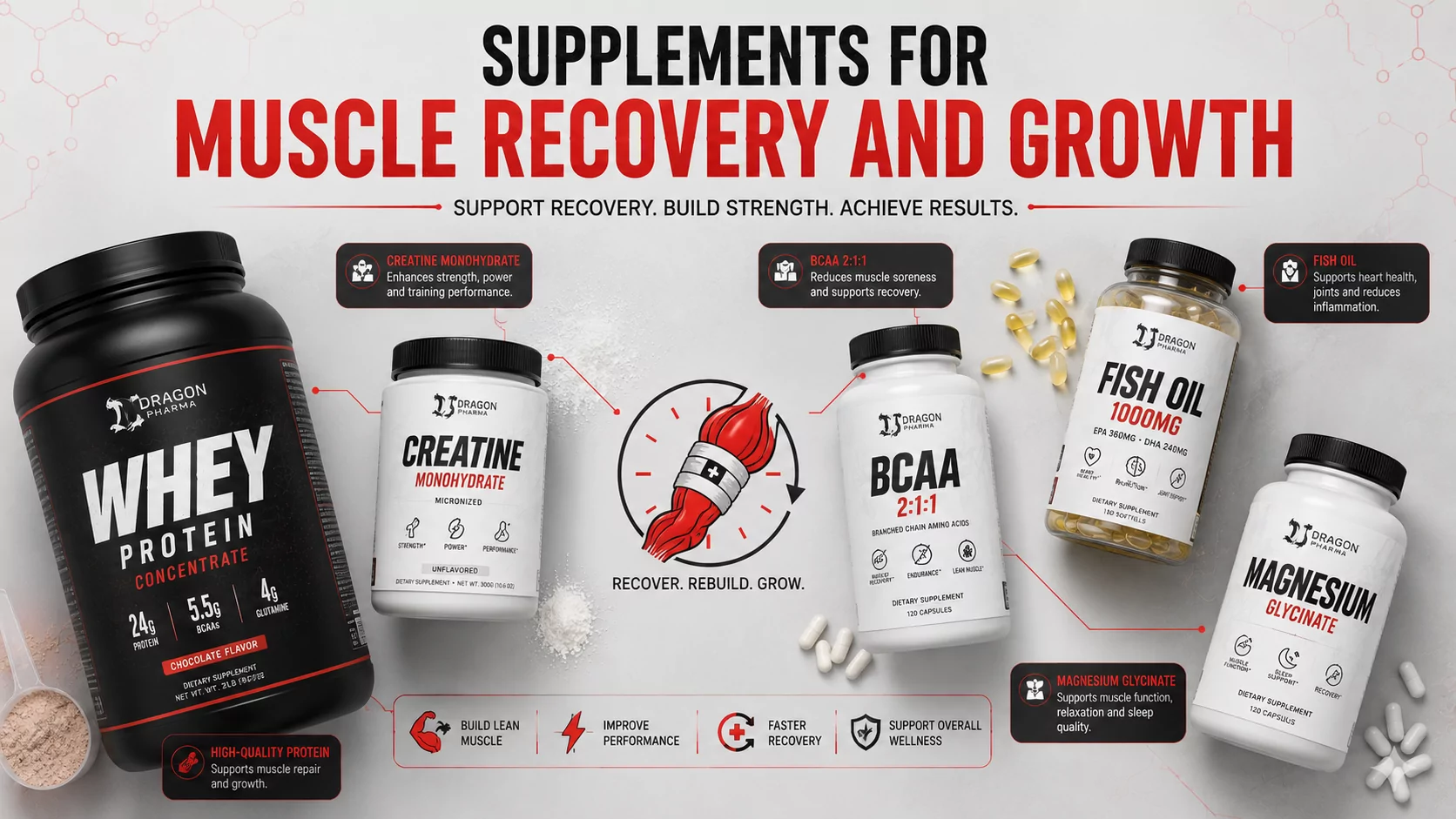
Whether you’re a competitive bodybuilder or a weekend warrior, muscle recovery is just as important as the workout itself. Without proper recovery, you won’t grow. You’ll stagnate, overtrain, or worse — get injured. This guide covers the most effective supplements for natural muscle recovery and growth, backed by real science.
Why Recovery Matters
When you lift weights, you create microscopic tears in your muscle fibers. Recovery is the process of repairing those tears, which makes the muscle larger and stronger. Without adequate recovery, those tears accumulate, leading to overtraining syndrome: fatigue, decreased performance, and increased injury risk.
Supplements can accelerate recovery, reduce muscle soreness, and support long-term growth. But not all supplements are created equal. Here’s what actually works.
Top 5 Supplements for Muscle Recovery
1. Whey Protein
Whey protein is the gold standard for post-workout nutrition. It’s rapidly absorbed, rich in essential amino acids, and particularly high in leucine — the key amino acid that triggers muscle protein synthesis. Aim for 20-40 grams within an hour after training.
Dosage: 20-40g post-workout
Best for: Immediate post-workout recovery
2. Creatine Monohydrate
Creatine is one of the most researched supplements in history. It replenishes ATP (your muscles’ energy currency), allowing you to train harder and recover faster between sets. It also draws water into muscle cells, creating an environment conducive to growth.
Dosage: 5g daily (no loading phase needed)
Best for: Strength, power, and inter-set recovery
3. BCAAs (Branched-Chain Amino Acids)
BCAAs — leucine, isoleucine, and valine — are essential amino acids that muscles use directly for energy during training. Supplementing with BCAAs can reduce muscle breakdown during workouts and decrease delayed-onset muscle soreness (DOMS) afterward.
Dosage: 5-10g during or after training
Best for: Reducing muscle soreness and fatigue
4. Omega-3 Fatty Acids (Fish Oil)
Omega-3s reduce inflammation throughout the body, including exercise-induced muscle inflammation. Less inflammation means faster recovery and less soreness. Omega-3s also support joint health, which is crucial for lifters under heavy loads.
Dosage: 2-3g EPA/DHA daily
Best for: Reducing inflammation and supporting joints
5. Magnesium
Magnesium plays a critical role in muscle relaxation, protein synthesis, and sleep quality — all of which affect recovery. Most lifters are magnesium deficient without knowing it. Supplementing can reduce cramps, improve sleep, and speed up recovery.
Dosage: 300-400mg daily (preferably magnesium glycinate or citrate)
Best for: Muscle relaxation and sleep quality
How to Structure Your Recovery Protocol
Supplements work best when combined with proper nutrition, sleep, and training. Here’s a sample daily recovery protocol:
- Morning: Creatine 5g + Omega-3 2g
- Pre-workout: BCAAs 5-10g (if training fasted)
- Post-workout (within 1 hour): Whey protein 20-40g + Creatine 5g (if not taken earlier)
- Evening (with dinner): Magnesium 300-400mg + Omega-3 1g
This protocol covers the basics without overcomplicating things. Consistency matters more than perfection.
Supplements That Don’t Work (Waste of Money)
Not everything in the supplement aisle is worth buying. Avoid these:
- Glutamine — Despite marketing claims, studies show minimal benefits for muscle recovery in healthy athletes.
- HMB — May help untrained individuals, but benefits for experienced lifters are negligible.
- Most “test boosters” — They don’t significantly raise testosterone in healthy males.
- BCAAs if you already eat enough protein — Whole protein sources already contain BCAAs. Save your money.
The Role of Sleep in Recovery
No supplement can replace poor sleep. During deep sleep, your body releases growth hormone, repairs tissues, and consolidates memories — including motor skills learned during training. Aim for 7-9 hours of quality sleep per night.
If sleep is an issue, consider magnesium (mentioned above), glycine, or low-dose melatonin (0.5-3mg). But fix sleep hygiene first: dark room, cool temperature, no screens before bed.
Nutrition Basics for Recovery
Supplements supplement — they don’t replace — a solid nutrition foundation. For optimal recovery:
- Protein: 1.6-2.2g per kg of body weight daily (e.g., 160-220g for a 100kg lifter)
- Carbohydrates: Replenish glycogen stores, especially post-workout. 3-5g per kg daily is a good starting point.
- Fats: Don’t fear healthy fats. They support hormone production, including testosterone.
- Hydration: Even 2% dehydration reduces performance and slows recovery. Drink water consistently throughout the day.
When to Consider Advanced Options
For natural lifters who have maxed out their progress with diet, training, and basic supplements, there comes a point where they may research more advanced options. If you’re in that position, it’s crucial to understand safety, legality, and sourcing.
Before making any decisions, education is key. Understanding how to identify quality sources and avoid dangerous counterfeits can literally save your health. There are many resources available online, and taking the time to learn from experienced users is invaluable.
If you’re curious about performance enhancement beyond basic supplements, read this helpful guide that covers the fundamentals of sourcing, safety practices, and community-vetted information. Knowledge is your best protection.
Frequently Asked Questions
For most lifters, 48-72 hours between training the same muscle group is sufficient. With proper nutrition and sleep, you may recover faster. With poor habits, slower.
Yes. Whey, creatine, BCAAs, omega-3s, and magnesium are safe to combine. Start with one at a time to assess tolerance if you’re concerned.
Whey protein can cause digestive issues in lactose-intolerant individuals (try isolate or plant protein). Creatine may cause bloating in some users. Magnesium can cause loose stools at high doses (reduce if this happens).
Possibly not. A perfect diet can provide everything you need. But few people consistently eat perfectly. Supplements fill the gaps and provide convenience.
If you’ve exhausted natural options and want to research further, start with educational content from experienced users. Understanding the fundamentals of safety, sourcing, and community-vetted information is essential before considering any advanced path.
Conclusion
Muscle recovery is the foundation of progress. Without it, you can’t grow, perform, or stay healthy. Start with the basics: whey protein, creatine, BCAAs, omega-3s, and magnesium. Build on a solid foundation of nutrition, sleep, and hydration.
Supplements are tools, not magic. Use them wisely, and they’ll help you recover faster, train harder, and achieve your goals. But always prioritize education and safety over shortcuts.